

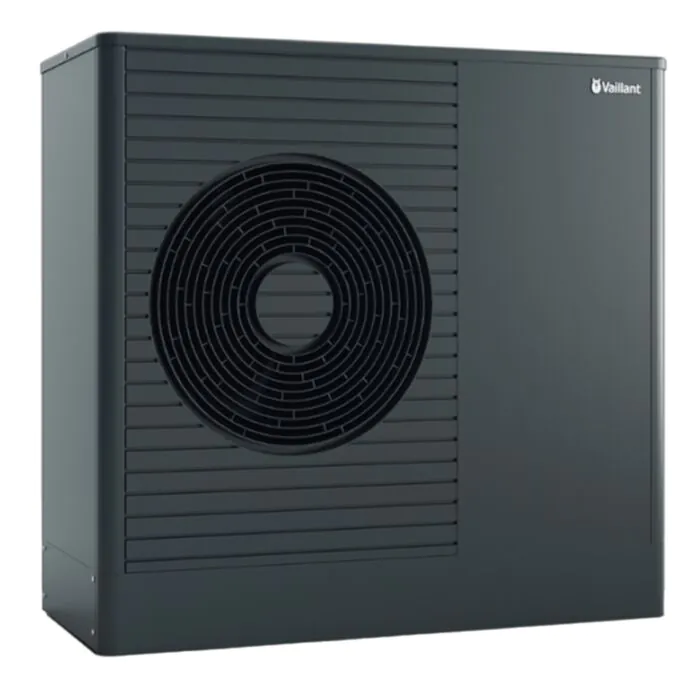
An air source heat pump moves heat from outside air into the house. For whole-home heating and hot water in the UK that usually means air-to-water: the outdoor unit heats a wet circuit — radiators or underfloor heating — and a cylinder. Air-to-air (split air conditioning) is a different job and a lower Boiler Upgrade Scheme grant.
The hub article mixed two grant schemes and described a generic “indoor unit + refrigerant pipes” as if every UK house got a split. Most domestic air-to-water installs here are monobloc: refrigerant stays in the outdoor box; water pipes come inside. Split air-to-water exists, and those refrigerant joints need an F-gas qualified engineer.
The domestic Renewable Heat Incentive closed to new applications on 31 March 2022. It paid quarterly for heat generated. The current England and Wales scheme is the Boiler Upgrade Scheme: an upfront grant the MCS installer applies for. It is not quarterly income. Hybrids (heat pump plus a fossil boiler) are not eligible. Full rules: gov.uk/apply-boiler-upgrade-scheme and Ofgem BUS.
What has to be true before anyone orders a unit
- Heat-loss survey. Room-by-room fabric and ventilation loss, not a brochure kW. That sets the outdoor unit, the emitters, and whether the house needs insulation first. Use the heat pump checker as a first filter, not as a design.
- Emitters. Heat pumps prefer a low flow temperature. Existing radiators often need upsizing; UFH is a good match if the loops can run at that flow. Check output at the design flow, not at ΔT 50.
- Hot water. Almost every air-to-water job needs a compatible cylinder (large coil or plate). A combi does not store that water. Retrofitting a thin-coil cylinder is a separate, limited path — see the plate-heat-exchanger note.
- Electrical supply. Dedicated circuit, correct isolation, and often a consumer-unit check. This is a competent electrician’s job under Part P, not a “plug it in” accessory.
- Outdoor space and neighbours. Airflow, condensate, snow/leaf clearance, and noise. Permitted development in England has siting and sound limits; some plots still need planning. Check early.
The install, in the order it usually happens
1. Outdoor unit
The compressor and outdoor heat exchanger sit on a firm base — often a plastic or concrete plinth — with clear sides and top. The hub’s “garden or yard, think about the neighbours” is right. The missing detail is sound power vs distance to the nearest window, and not boxing the unit in. A monobloc then needs insulated flow and return, a condensate route that will not freeze, and isolation valves you can service.
2. Indoor plant
Typical indoor kit is a cylinder, circulating pump(s), mixing or buffer only if the design needs them, dirt separator, and controls. It is not automatically a wall-hung “indoor unit” with refrigerant tails. That layout is for splits and for air-to-air. Put the cylinder where the old one was, or where a new cupboard can take the taller heat-pump store.
3. Taking the gas boiler out
If you are replacing a gas boiler, disconnection, purge, and capping of the gas is Gas Safe work. The heat pump itself is not a gas appliance. The old flue, condensate, and filling loop still have to be made safe. A hybrid that leaves the boiler in place is a different design, and it does not get the BUS grant.
4. Controls and commissioning
Weather compensation or an equivalent heat curve, hot-water set points and legionella regime, and a documented MCS commissioning pack. User training should cover the curve, the holiday/setback, and what “the fan is running and the house is still cold” actually means (often emitters or a curve, not a broken compressor). A heat meter is not required for BUS; it is for networks and some monitoring — see heat meters.
What the hub overstated
- “Significant energy savings” as a given. A well-designed system can land around 3–4 kWh of heat per kWh of electricity (SCOP). A high flow temperature, small radiators, or a leaky house will not. Running cost vs gas depends on the two unit prices that year, not on a slogan.
- “Heating and cooling” on every ASHP. Air-to-water can cool only if the indoor system is built for it (fan coils or a designed cooling circuit). A radiator circuit does not cool a house. Air-to-air does both; it does not heat a cylinder.
- BUS as quarterly RHI-style payments. Wrong. BUS is a one-off voucher, typically £7,500 for air-to-water, or £9,000 until 31 March 2027 if you replace oil or LPG and have no mains gas. One grant per property. The installer is MCS-certified and usually applies.
Who should do the work
For a grant-backed air-to-water system: an MCS-certified installer (and a product on the MCS directory). F-gas qualification if refrigerant is opened. A competent electrician. Gas Safe if gas is disconnected. Building Regulations (including Part L and electrical) sit with the installer, not with a web page.
A Rated / MyBoiler surveys and installs in London and the surrounding area. Start from the heat pumps overview or a quote if you want that route.
Related
- Heat pumps — types, SCOP, and current BUS figures
- Air source heat pumps — air-to-water vs air-to-air
- Heat pump checker
- Heat-pump compatible cylinders
- Hybrid heat pumps — not BUS-eligible
- Why heat pumps work well with underfloor heating
Guidance only, checked against GOV.UK and Ofgem BUS pages in October 2026. Grants, permitted development, and MCS rules change. Gas work in the UK needs a Gas Safe registered engineer. This page is not an install manual.