Heat meters
A heat meter records the kWh a wet heating circuit actually delivers, from flow rate and the temperature drop between flow and return.


A heat meter records the kWh a wet heating circuit actually delivers, from flow rate and the temperature drop between flow and return.
Every heat meter has three parts:
It is not measuring “how hot the boiler is”. It is measuring how much energy left the water. If the pump is running and ΔT is near zero, the meter correctly records almost no heat.
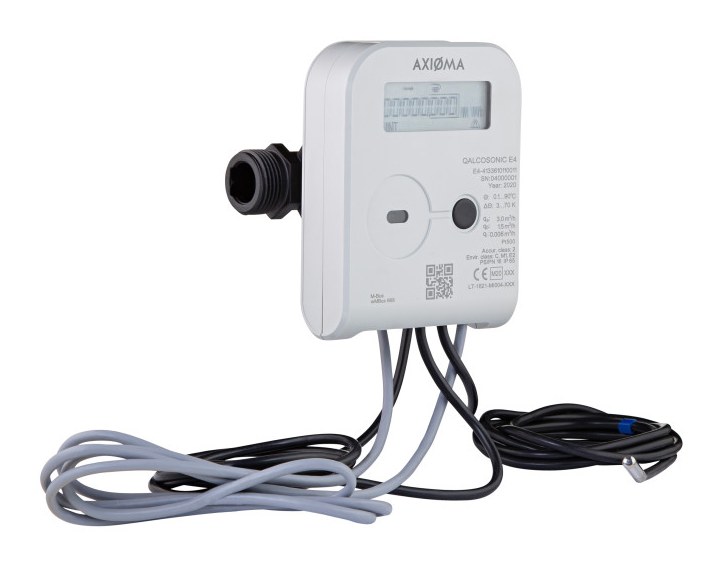
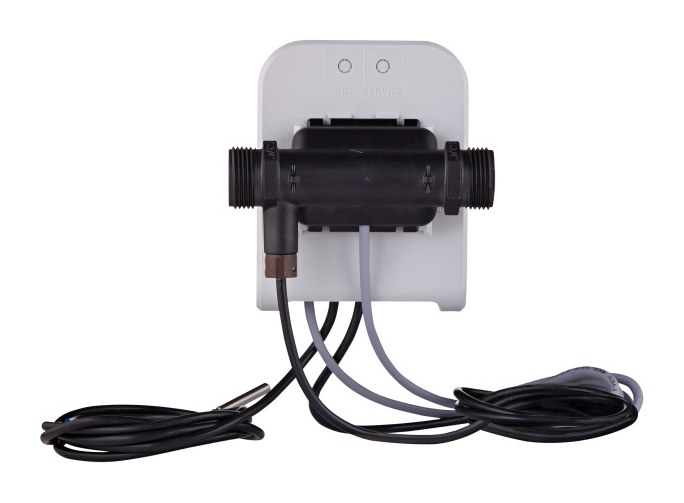
On the Qalcosonic E4 the calculator usually sits on the flow body. You can also split it: unclip the electronic block and mount it on the wall, with the ultrasonic tube left in the pipe. One temperature sensor is often in a pocket on the meter; the other goes in a pocket on the opposite pipe.
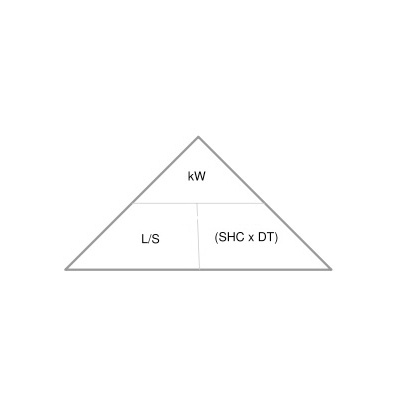
kW = (flow in m³/h × ΔT) / 0.86
Flow must be in m³/h (1 m³/h = 16.7 L/min). Example: 8 kW at ΔT 5 °C needs about 23 L/min; 24 kW at ΔT 20 °C needs about 17 L/min.
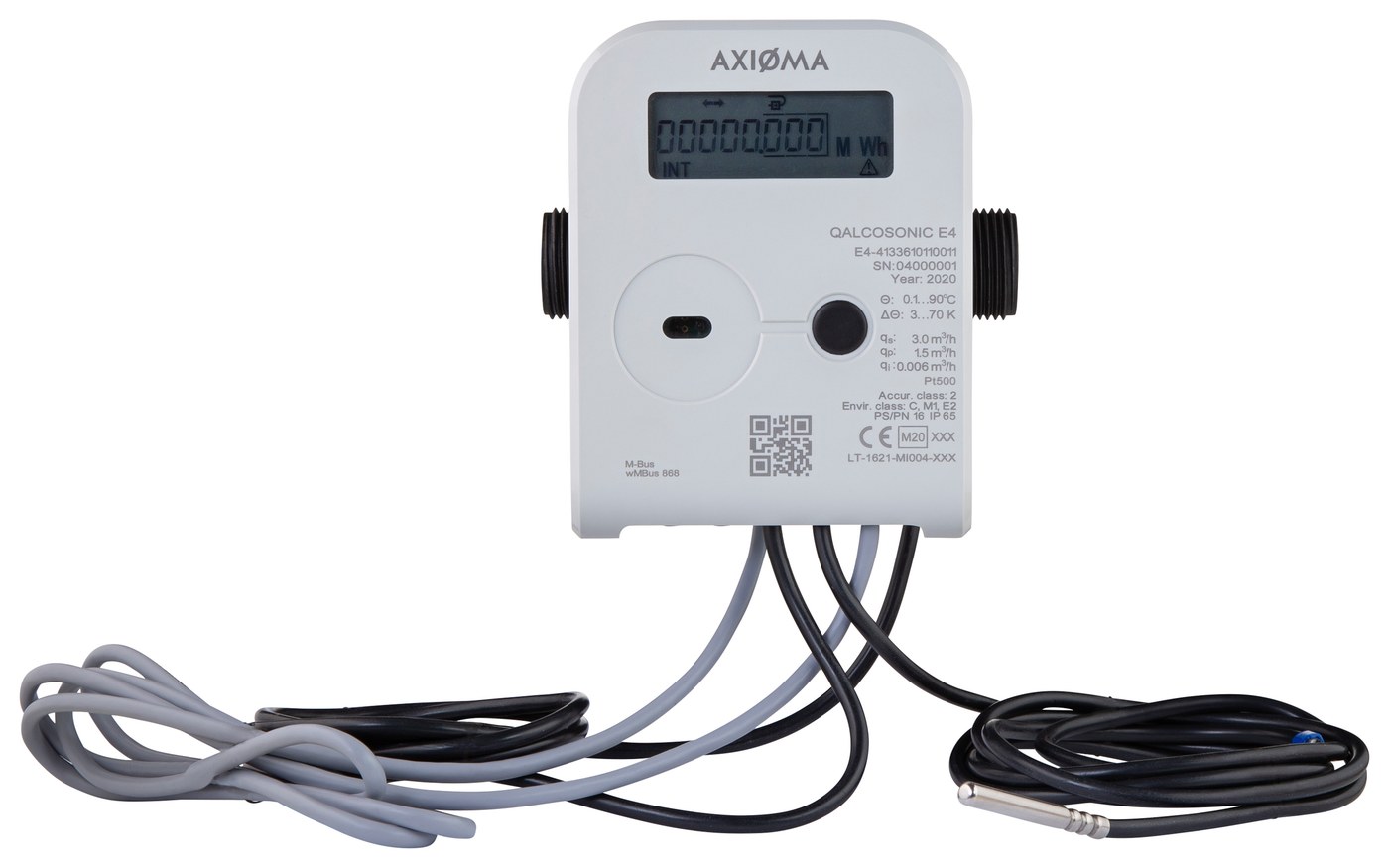
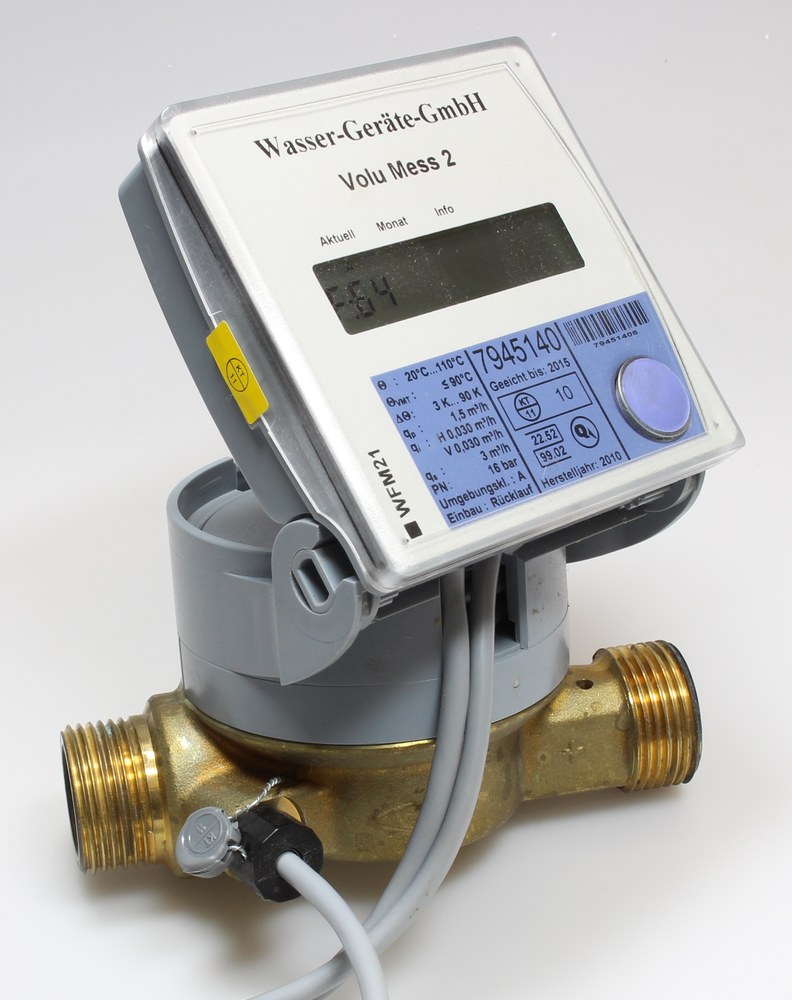
No moving parts. Transit-time transducers measure flow through the water. This is the usual choice for heat pumps, heat networks, and MID billing. The Qalcosonic E4 is an ultrasonic meter that can stay compact or be split: MID Class 2, DN15–DN40, qp 0.6–10 m³/h, Pt500 sensors, water as the heat carrier, any orientation, and no straight pipe lengths required. Communications typically M-Bus, wireless M-Bus, Modbus, LoRa, or BACnet.
A spinner in the brass flow body turns with the water. The calculator still uses paired temperature sensors and ΔT, same as an ultrasonic — only the flow measurement is different. Needs a strainer, wears, and is more sensitive to debris and air. Still seen on older district-heating flats. Less common for new heat-pump work.
Measures velocity in conductive water. No moving parts, good on larger plant-room sizes. Overkill for a single dwelling.
Compact — calculator clipped onto the flow sensor (as in the E4 photos above). Split — the same calculator taken off the tube and mounted on the wall, with the flow sensor left in the pipe. The E4 does both: compact is quicker on a domestic return; split keeps the display readable in a plant room or a tight cupboard.
Clamp-on ultrasonics are useful for commissioning checks. They are not usually a MID billing meter.
Radiator heat-cost allocators (the small devices clipped to a panel) apportion a building’s heat. They do not measure kWh. A heat pump’s own estimated energy display is also not a billing meter.
See also kW to flow rate · LPM to kWh · Heat pumps.
