

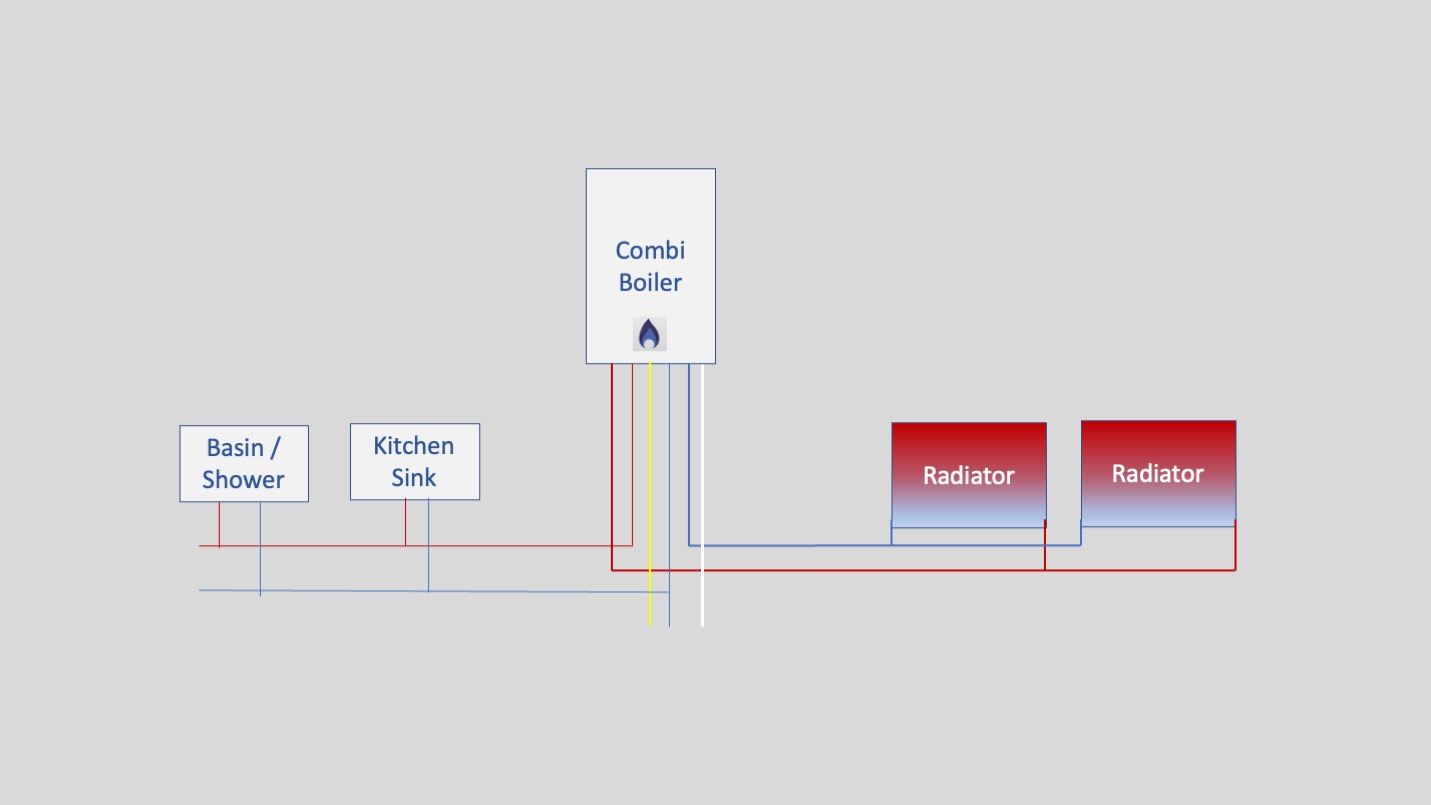
A combi (combination boiler) packs space heating and domestic hot water into one case. Open a hot tap and cold mains water is heated on demand through a plate heat exchanger (or a combined heat exchanger on some designs). The same burner heats the radiators when the heating calls. That is why combis took over UK flats and many houses: one cupboard, no cylinder waiting to run out of store.
It is still a sealed heating system. Pressure, inhibitor and a filling loop matter the same way they do on a system boiler. The difference is that hot water does not come from a cylinder coil — it is made as you use it. Side-by-side with the other types: boiler types.
Advantages
- Continuous hot water while the boiler and the cold main are working — there is no cylinder store to empty.
- Space saving — no hot-water cylinder and usually no loft tanks.
- Mains-pressure taps — shower pressure follows the cold main. You do not need a cold-water storage cistern or a booster pump unless the private supply is weak.
- Simpler install than a full cylinder system when the pipework and flue path allow it — fewer vessels and less copper in the loft.
Disadvantages
- No immersion backup. If the boiler fails, you lose heating and hot water together. An electric shower on the cold main is the usual partial fallback.
- More DHW parts. Diverting valves, plate heat exchangers and inlet filters are common wear and scale points. Some boilers (for example Intergas combined-HEX designs) remove the separate plate; that is not true of every make.
- Flow rate is limited by the boiler’s DHW output and by the incoming cold main. One decent shower or bath at a time is the honest expectation. Storage combis with a small built-in store help the first draw; they do not invent two simultaneous baths from a weak main.
- Renewables need a store. A standard combi does not take solar thermal or a heat pump as a simple bolt-on the way a cylinder system can. Hybrid and diverter products exist (see solar thermal and the Intasol exception) — they are not “combi alone plus panels”.
A combi does not raise mains pressure. If the kitchen cold tap is weak, the hot tap will be weak. Measure flow before you buy a bigger badge. See low mains water pressure.
When a combi is the right answer
- Limited space and no room (or appetite) for a cylinder.
- One bathroom, or simultaneous demand that a measured main and a correctly sized combi can actually meet.
- A cold main with enough pressure and flow — typically what flats and many modern houses already have.
Large homes, two baths at once, or a weak private supply usually want a system or regular boiler with a sized cylinder — not a louder combi. Type choice in a real house sits on choosing a new boiler; sizing is on what size boiler.
Related
- Combi boiler — install layout and life-extending extras
- New combi boiler
- Choosing a new combi boiler
- Combi boiler cost
- Boiler types
- System boiler
- Regular boiler
- Low mains water pressure
Guidance only, rewritten from the original hub.myboiler.com “What is a Combi Boiler?” page (2016). Gas work in the UK stays with a Gas Safe registered engineer. Flow and heat-loss figures belong on the survey, not on a badge size alone.