

Smarter Heating & Hot Water
Turn the flow temperature down first. That is the simplest way to use less gas.
A non-condensing boiler cannot be optimised in the same way as a condensing boiler. Any saving from a lower flow temperature is much smaller than on a modern condensing boiler.
What still helps:
Replacing it is the larger step. A condensing boiler is the usual swap. A heat pump can take its place where the radiators and the house are suitable.
On a combi, this is the radiator flow. Tap and shower temperature stays as it is.
The cylinder is about 5°C below the flow. Legionella is possible once stored water drops below 50°C.
Bacteria start dying. The cylinder is about 50–55°C, where growth is inhibited and the bacteria die off as the stored water rises.
A boiler left on its full heating rating often puts out more heat than the house can lose. It reaches temperature, shuts off, then starts again. Those short runs use more gas on each ignition, make more noise, and wear the boiler.
A lower central-heating maximum keeps the burner on longer at a lower rate. That is steadier heat, and on a condensing boiler it spends more time with a cool enough return to condense. On a combi, leave the hot-water output at its higher rating so the taps stay hot. A Gas Safe engineer sets this.
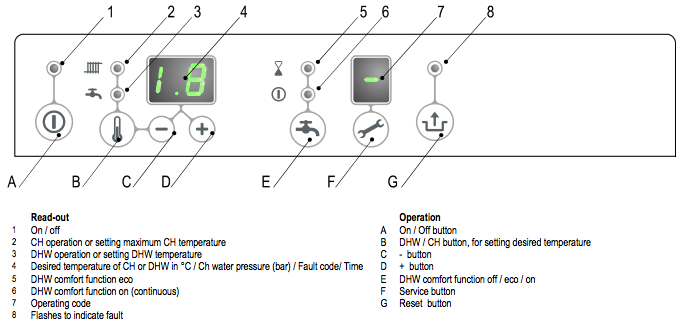
Button steps for this brand are not here yet.
The cylinder is assumed to sit 5°C below the flow. The gap can be higher than that.
Public campaigns usually cover combi boilers only, because stored hot water has to stay hot enough.
If this flow is keeping the house warm in peak winter, a heat pump may suit this system without many changes.
Check heat pump suitability2026-09-27 08:34 · 3